November 10, 2026, Hong Kong

Interviews
In Conversation with Kaihua Liao: What Makes a Beer Perform in Judging & Connecting with Consumers?
China Beer Judge Kaihua Liao shares what separates technically sound beers from memorable ones, how China’s beer market is evolving, and why breweries need to think beyond competition scores when approaching consumers.
As beer culture across China and the wider Asian market continues to mature, the conversation is increasingly moving beyond simply discovering craft beer. Consumers are becoming clearer about what they enjoy, while brewers are returning to styles where balance, precision and drinkability can matter more than intensity.
For Kaihua Liao, a Beer Judge with extensive experience in beer evaluation, sensory analysis and style-focused judging, this evolution is particularly interesting.
Based between Taiwan and Shenzhen and active across the Asian beer industry, Kaihua has judged more than 30 beer competitions across Asia. Her experience combines structured beer evaluation with a practical understanding of consumer behaviour through beer selection and hospitality at Double Coffee Bar in Shenzhen.
Through competition training and extensive judging experience, she has developed a systematic approach to assessing beer across aroma, flavour, mouthfeel, balance, technical execution, and adherence to style. But for Kaihua, technically correct beer is only part of the equation.
The best beers also communicate a clear intention and, importantly, make the drinker want another glass.
As a judge at the 2026 China Beer Competition, Kaihua brings this combination of technical understanding, sensory expertise and real-world consumer perspective to the judging panel.
We spoke with Kaihua about the evolution of beer culture in China, what consistently performs well in professional judging, the return of traditional beer styles, how consumer preferences differ from competition criteria and what international breweries should understand before approaching the Chinese market.
You are based between Taiwan and Shenzhen and have been active across the Asian beer industry. How would you describe the evolution of beer culture in China and the wider Asian market over the last few years?
I spend much of my time between Taiwan and Shenzhen, and beer competitions have also taken me to many cities across Asia. My strongest impression is that major Asian beer markets are gradually moving from “discovering craft beer” to consumers knowing more clearly what they actually want to drink.
This is especially noticeable in China. Earlier, craft beer culture was strongly attracted to IPA, high-ABV beers, and intense fruit additions. In recent years, both at competitions and through beer selection at my bar, I have seen growing interest among experienced drinkers and brewers in Lager, Pilsner, and traditional British, Czech and German styles.
This does not mean demand for bold flavours has disappeared. The market is becoming more diverse. Consumers may not necessarily drink more, but they increasingly care about quality, value for money and, most importantly, whether they want another glass.
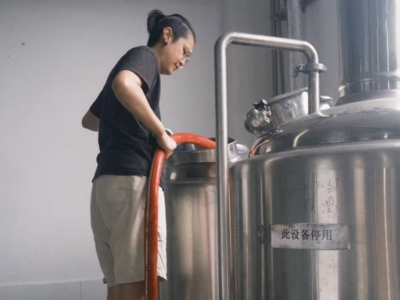
Having judged more than 30 beer competitions across Asia, what are the most common characteristics you see in beers that consistently perform well with professional judges?
After judging more than 30 beer competitions, I find that beers that consistently score well rarely depend on one particularly intense characteristic.
First is technical cleanliness. Significant brewing or process faults can quickly reduce a beer’s competitiveness. Second is balance: malt, hops, fermentation character, alcohol, sweetness, and bitterness need to work together rather than compete for intensity.
Third is style accuracy. In a style-based competition, I need to understand what the beer is trying to express and whether it successfully presents the core characteristics of its entered style.
Finally, there is completeness. High-scoring beers are usually coherent from Aroma and Appearance through Flavor and Mouthfeel.
I often encounter beers that are very enjoyable but do not necessarily score highly. The strongest competition beers usually combine technical execution, accurate style expression, balance, and drinkability.
As a BJCP Certified Judge with a strong background in beer sensory education, what do you look for first when evaluating a beer? What separates a technically good beer from a truly memorable one?
When I receive a beer, I naturally notice the strongest sensory signals first, including any obvious faults. But judging, for me, is not simply a process of searching for everything that is wrong. I first try to understand what the beer is intended to be.
I begin with Aroma to establish a sensory profile, then move through Flavor and Mouthfeel, observing whether the different elements support one another before considering style accuracy, technical execution, and overall balance.
A technically good beer can be clean, fault-free, and stylistically accurate, but those qualities are the foundation for a high score.
The beers I truly remember usually go further: they have a clear direction. I can understand the brewer’s intent, and every element supports it. It may not be the most intense beer on the table, but it can be the most complete and memorable.
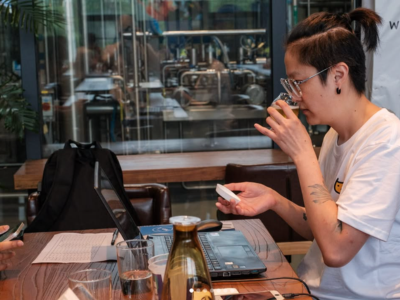
China’s craft beer scene has developed significantly in recent years. Which beer styles, flavour profiles or brewing trends are you currently seeing gain momentum among Chinese consumers?
One noticeable trend from competitions in China is renewed attention to traditional and historic beer styles.
Competitions once featured large numbers of IPAs, Imperial Stouts, fruit beers, spiced beers and other heavily flavoured entries. These remain important, but over the past two years I have seen more German, Czech and British traditional styles on the judging table.
The broader commercial market is developing along another path at the same time. Accessible fruit character, lower bitterness, lighter and drier bodies, and concepts such as lower sugar and lower calories can make beer more approachable to a wider audience.
I therefore do not see China moving toward one dominant style. I see segmentation. Experienced drinkers are rediscovering traditional styles that appear simple but demand excellent brewing technique, while the wider market increasingly values beers that are approachable, understandable and suitable for everyday drinking occasions.
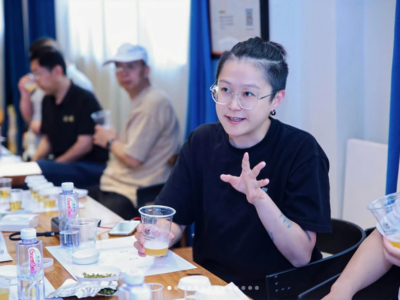
From your experience in beer selection and hospitality at Double Coffee Bar in Shenzhen, how different can consumer preferences be from what professional judges or beer specialists look for?
This is one of the things I have learned most clearly from being both a judge and a bar operator.
In competition, we analyse Aroma, Flavor, Mouthfeel, Balance, Style Accuracy, and potential technical issues. A customer sitting at the bar at Double Coffee Bar usually does not think this way.
They might simply tell me, “I don’t want something too bitter,” “I want something refreshing today,” “I like fruity aromas,” or, most importantly, “I’d have another one.”
Those are also meaningful sensory responses.
I therefore never decide whether to stock a beer based solely on competition scores. Price, food, weather, drinking occasion, the customer’s experience, and whether they want a second glass all matter.
Professional judges evaluate beer within defined criteria. Consumers decide whether a beer has value within their own lives. These perspectives are different, but they are not contradictory.

For an international brewery hoping to enter the Chinese market, what should it understand about local drinking culture and consumer expectations before introducing its beers?
The first thing I would say is: do not think of “China” as having one single taste.
China is geographically enormous. Drinking culture, price sensitivity, consumer knowledge, and drinking occasions can differ significantly between Shenzhen, Shanghai, Beijing, Chengdu, and other cities. Even within one city, a specialist craft beer bar, restaurant, retail channel, and casual social gathering may require very different products.
From my experience behind the bar, Chinese consumers are also practical. Freshness, price, and whether a product is easy to understand matter. For someone new to craft beer, “What does this taste like, and will I enjoy it?” may be more important than a complicated brand story.
International breweries must also consider import time, cold-chain logistics, storage, and distribution, particularly for hop-forward beers.
Before asking, “What beer does China like?”, I would ask: “In what drinking occasion do you want your beer to appear in China?”
You have judged competitions across different Asian markets. Do you see noticeable differences in beer preferences between China, Taiwan, and other parts of Asia?
Yes, but I am careful not to reduce any market to a single taste.
China is geographically large, so differences in market maturity, style preference and acceptable price points can be significant even between cities.
Taiwan, Hong Kong, Japan and South Korea have had relatively long exposure to international craft beer, and many consumers are comfortable exploring a broad range of international styles.
Southeast Asia has another context, influenced by climate, food and social drinking culture, where refreshing and highly drinkable beers have a strong foundation. At competitions, however, I also see increasing sophistication. Thailand is a good example: I have encountered increasingly accomplished IPAs, Lagers, Saisons and beers incorporating local ingredients.
For me, the most interesting thing about Asia is not finding one “Asian preference,” but seeing how international beer styles are reinterpreted and expressed through different local cultures.
Sensory education is an important part of your work. How can better beer education help both consumers and the trade become more confident in discovering different beer styles?
When I teach sensory evaluation, my goal is not to turn everyone into a beer judge.
What matters is developing the ability to identify, describe, and understand flavour.
Many people know whether they “like” or “dislike” a beer but cannot explain why. Learning to recognise sweetness, acidity, bitterness, alcohol, esters, phenols, malt and hop characteristics gives people greater confidence when choosing their next beer.
For the trade, this common language is even more important. Brewers, salespeople, bar staff and consumers can easily misunderstand one another when they describe flavour differently.
Sensory education creates a shared vocabulary. When a server can translate “Belgian Tripel” into understandable descriptions of aroma, sweetness, alcohol, body and drinking experience, beer education becomes useful in everyday life rather than existing only in examinations, certifications or professional classrooms.
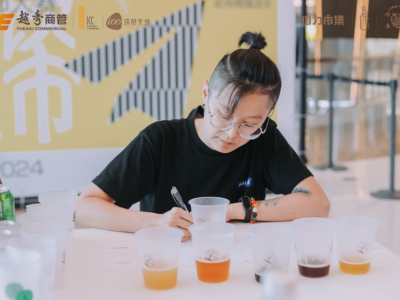
As a judge at the China Beer Competition 2026, what will you personally be looking for when evaluating the entries this year?
I will not arrive expecting to find one particular style or flavour.
As a judge, I first want to respect the category in which each beer is entered and understand what the brewer intends to express.
I will pay particular attention to four areas: technical execution, balance, style expression and drinkability.
Details matter. A beer may have no obvious faults, but fermentation control, alcohol integration, the relationship between sweetness and bitterness, or even the finish can affect its overall completeness.
At the same time, I do not want judging to become simply an exercise in finding mistakes.
When a beer quickly communicates its intent and everything from Aroma and Flavor to Mouthfeel and Finish supports that direction, I usually want to spend more time confirming what I am experiencing.
For me, an excellent beer is not simply one that did nothing wrong. It clearly knows what it wants to be.
What would you say to breweries around the world considering entering the China Beer Competition and looking to understand how their beers may perform with the Chinese and Asian trade?
I would encourage them to enter, and not to view the competition only as an opportunity to win a medal.
For an international brewery interested in China and Asia, presenting its beer to professional judges from different markets and cultural backgrounds provides a valuable independent evaluation.
Of course, competition results cannot fully represent consumer demand. Judges primarily evaluate quality, style, technical execution, and overall performance. In the real market, price, branding, distribution, freshness, and drinking occasion also matter.
But professional judging can answer another important question: once your beer leaves its familiar home market, is its flavour intention still clear? Does its quality still stand up? Can professionals from different cultural backgrounds understand what you intended to create?
That is one of the great values of international competitions. Medals matter, but gaining a new perspective on your beer and a new market can have value that lasts much longer.
Kaihua’s perspective reveals an important shift taking place in China’s beer market. As consumers become more knowledgeable, more intensity does not necessarily mean a better beer.
Traditional styles such as Lagers, Pilsners and British, Czech and German styles are finding renewed attention precisely because their apparent simplicity leaves little room for poor execution. At the same time, the broader commercial market is developing demand for approachable beers with lighter bodies, lower bitterness and characteristics that work naturally within everyday drinking occasions.
For breweries, that creates two different but connected considerations: how does the beer perform technically, and does somebody actually want another glass?
Kaihua’s experience as both a judge and bar operator makes that distinction particularly relevant. Competition judging provides a structured assessment of aroma, flavour, mouthfeel, style accuracy, balance and technical execution. Consumers, however, make decisions through a much broader set of factors—price, occasion, weather, food, familiarity and personal preference.
Neither perspective replaces the other.
For an international brewery considering China, her advice is equally important: do not approach China as though it represents one consumer or one drinking culture. Shenzhen, Shanghai, Beijing, Chengdu and other markets can differ considerably, while the appropriate product can also change between specialist beer bars, restaurants, retail and casual drinking occasions.
The better question may therefore not be “What beer does China want?” but “Where, when and why do we expect someone in China to drink this beer?”
China Beer Competition
Bringing together technical evaluation and market relevance is central to the China Beer Competition.
The competition is designed to recognize beers that demonstrate excellence in the glass while also identifying products capable of making a strong impression within an increasingly sophisticated beer market.
Judges such as Kaihua Liao bring professional tasting and sensory expertise to that process, assessing whether beers communicate their intended style successfully and whether the individual elements work together as a complete drinking experience.
For Kaihua, four factors will be particularly important during the 2026 judging:
- Technical execution.
- Balance.
- Style expression.
- Drinkability.
That provides breweries with something valuable beyond the possibility of a medal. Entering an international competition puts a beer in front of professionals who can assess whether its quality and flavour intention remain clear outside its familiar home market.
For breweries considering China and the wider Asian market, that independent perspective can be particularly useful. A beer may have an established identity with consumers at home, but international judging asks whether professionals from different markets and cultural backgrounds can understand and appreciate what the brewer intended to create.
A medal at the China Beer Competition provides independent industry validation and gives breweries an additional credential to communicate their quality to importers, distributors, retailers, hospitality professionals and consumers.
But as Kaihua points out, the value does not necessarily end with the medal.
Understanding how your beer performs when placed in front of an international judging panel can provide another perspective on the product itself—and potentially on the market it hopes to enter.
As the 2026 China Beer Competition approaches, Kaihua will therefore not be looking simply for beers that avoid mistakes. She will be looking for something more complete: a beer that clearly knows what it wants to be.
This interview was conducted by Ankita Okate, Chief Growth Officer & Head of Events at China Beer Competition, as part of an ongoing interview series featuring leading beer judges, buyers, brewers, importers, distributors, bar operators and beverage professionals.
Also Read:
In Conversation with Kevin Wong: What Makes a Beer Stand Out in Judging and in the Market?
Kenneth Shares His Passion for Beer and What’s Ahead in Brewing in China
Key Dates
Early Bird Deadline: July 31, 2026
Regular Deadline: October 14, 2026
Warehouse Deadline: October 22, 2026
Judging Date: November 10, 2026
Winners Announcement: November 24, 2026